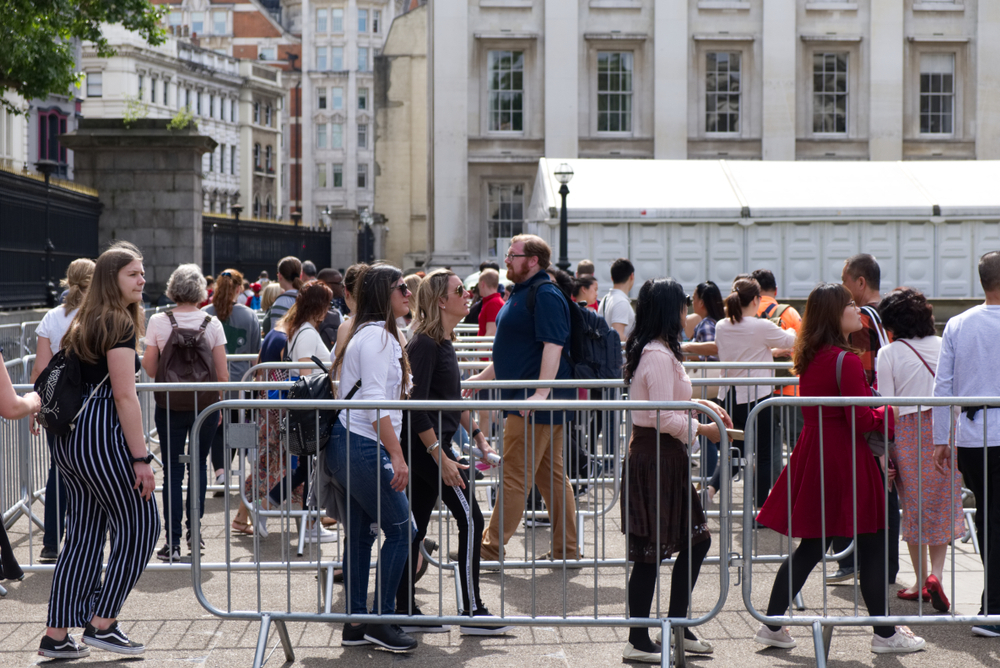
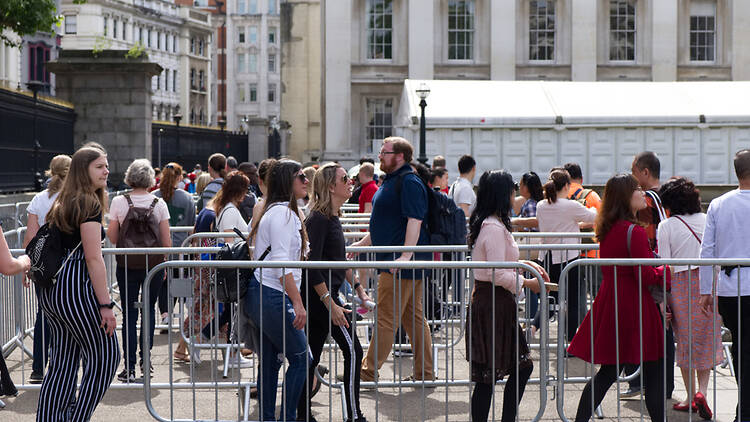
Anyone who’s visited the British Museum in the last few years will know that its Great Russell Street entrance isn’t looking quite as grand as it once did. Since 2016 London’s busiest attraction has featured grubby, grey-ish tents for security, which often have lengthy queues streaming out of them.
Soon, however, those tents – which many reckon are a bit of an eyesore – will be gone. The British Museum has submitted plans to Camden Council to swap its current security tents and barriers for two sleek new pavilions, turning the lawns on Great Russell Street into a ‘Mediterranean-style’ garden space.
The goal of this redevelopment masterplan, according to the museum, is to shrink chaotic queues and provide an easier, more aesthetically-pleasing welcome experience. The two pavilions will boast ‘state-of-the-art’ security scanners which not only mean that guests can be screened without having to empty their bags, but there won’t be any need for unsightly tents.
Co-designed between Studio Weave, Wright & Wright Architects, Webb Yates Engineers, Tom Massey Studio and Daisy Froud, the pavilions are also expected to provide more accessibility and interactive installations. Completion of the new pavilions could come later this year.
Good news, right? Well, actually not everyone is on board this particular BM glow-up. Some heritage bodies and conservation groups have objected to the proposal, warning that the revamp could disrupt the symmetry of building’s Greek Revival architecture (which is surely among London’s most iconic façades).
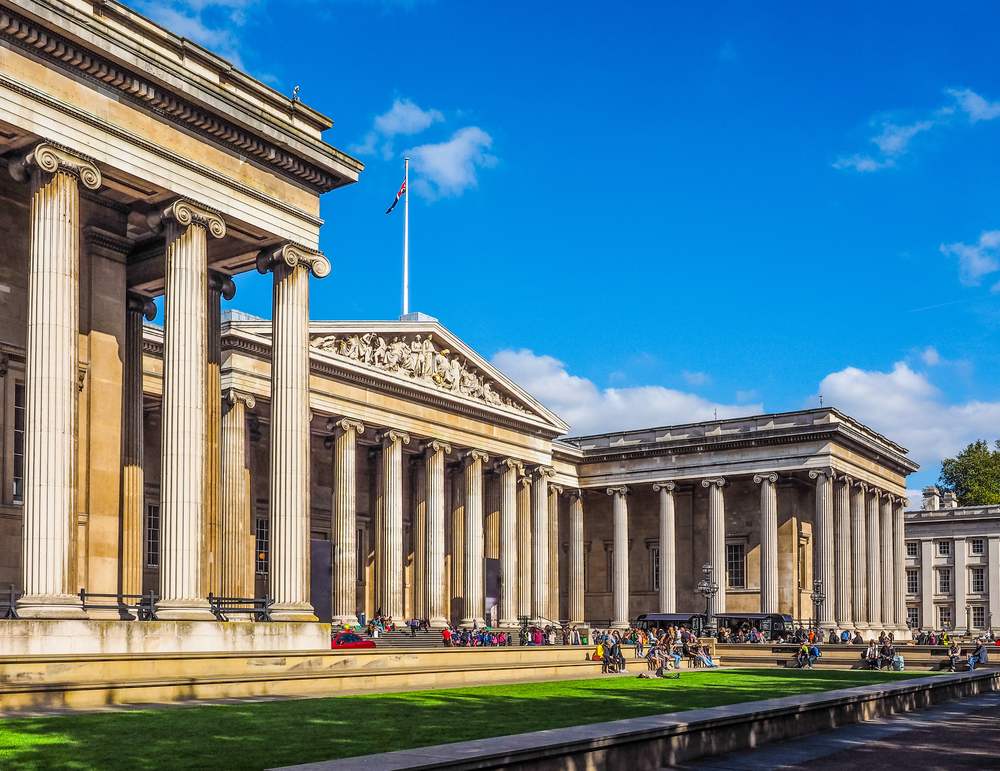
The Georgian Group, a conservation organisation devoted to 18th and 19th century buildings, argued: ‘The proposed pavilion would partially obscure views of the southern elevation from Great Russell Street and within the forecourt itself, disrupting the building’s symmetry and undermining its setting.
‘While we recognise the operational challenges faced by the Museum and the desire to improve visitor management and access, we consider that the proposals would cause an unacceptable level of harm to the significance of this internationally important site.’
The Victorian Society, a charity dedicated to preserving Victorian and Edwardian architecture, also chimed in, stating that the proposed pavilions were ‘too flashy’ and resemble ‘a shop and wine bar’.
The British Museum opened in 1759, with the Greek Revival structure in question designed by Sir Robert Smirke in 1823. The institution is currently in the midst of what it says is the ‘biggest transformation of any museum in the world’, with the likes of its Western Galleries among the areas at the centre of a multimillion-pound redesign.
Planning applications for the revamp are expected to go before the Camden Council planning committee later this month. In the meantime, here is Time Out’s ultimate guide to visiting the British Museum.
Here are the 25 best museums in London, according to Time Out.
Get the latest and greatest from the Big Smoke – from news and reviews to events and trends. Just follow our Time Out London WhatsApp channel.
Stay in the loop: sign up for our free Time Out London newsletter for the best of the city, straight to your inbox.


