★★★
Frida Kahlo’s brought the sun to London. Tate Modern has sold more advance tickets for Frida Kahlo: The Making of an Icon — which runs into the new year – than for any exhibition in the Tate gallery’s 128-year history. It’s not surprising. More than seventy years after her death at the age of 47, the Mexican artist remains a cultural phenomenon: a painter, fashion muse, feminist icon and, as the gift shop attests, a patron saint of tote bags and tea towels. This exhibition sets out to show how Frida became one of the most recognisable artists of the 20th century and a source of inspiration for generations of artists who followed.
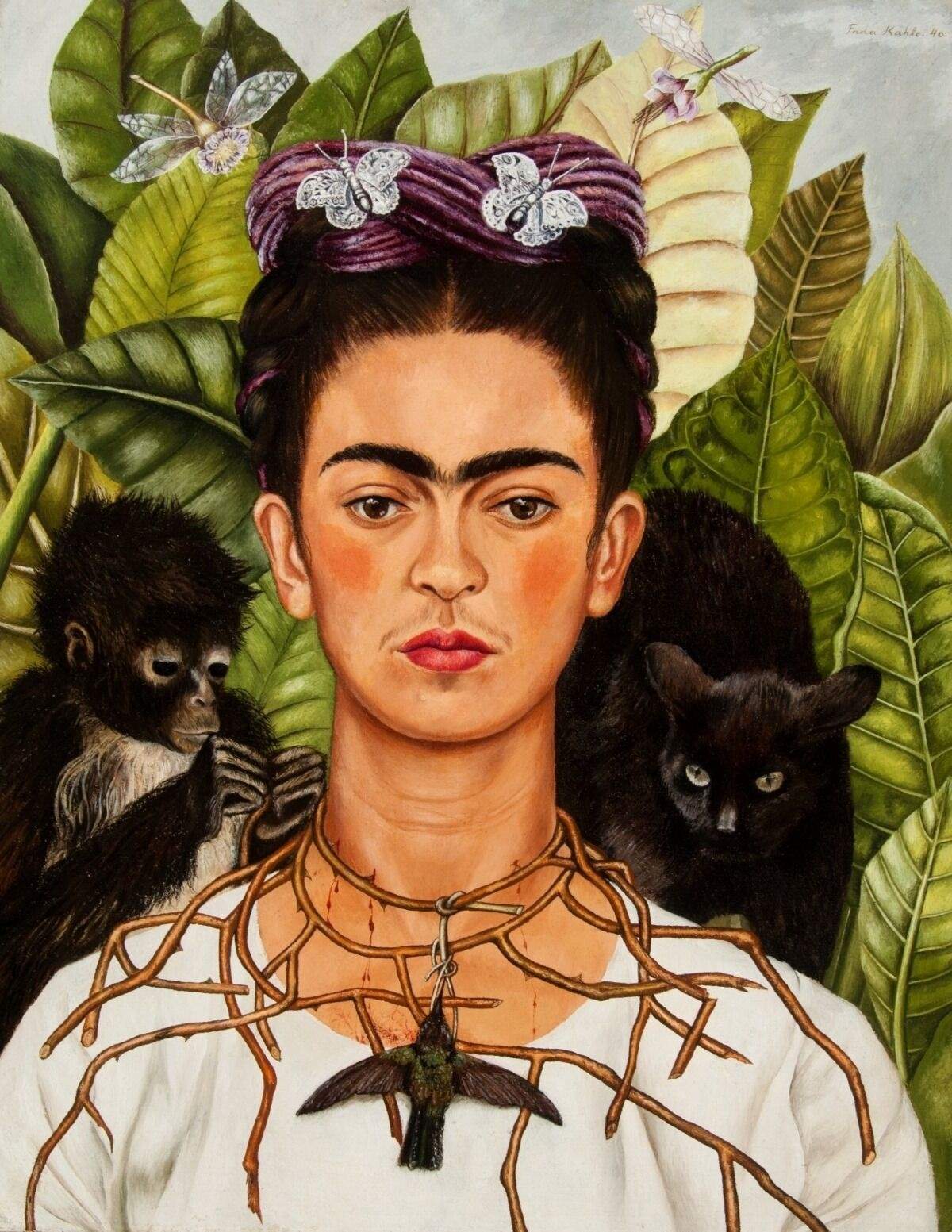
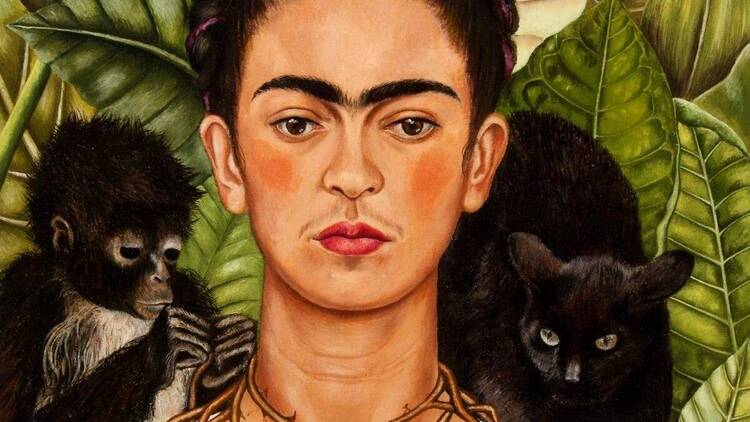
The strongest rooms are the first few, which bring together the majority of the exhibition’s 23 paintings and 11 works on paper by Kahlo. Moving from early self-portraits to landscapes and still lifes, the galleries explore the themes that defined her practice: death and dreaming, Mexican nationalism, her fraught relationship with her husband, the muralist Diego Rivera, her ambivalent attitude towards the United States, her Surrealist associations and her divided sense of self.
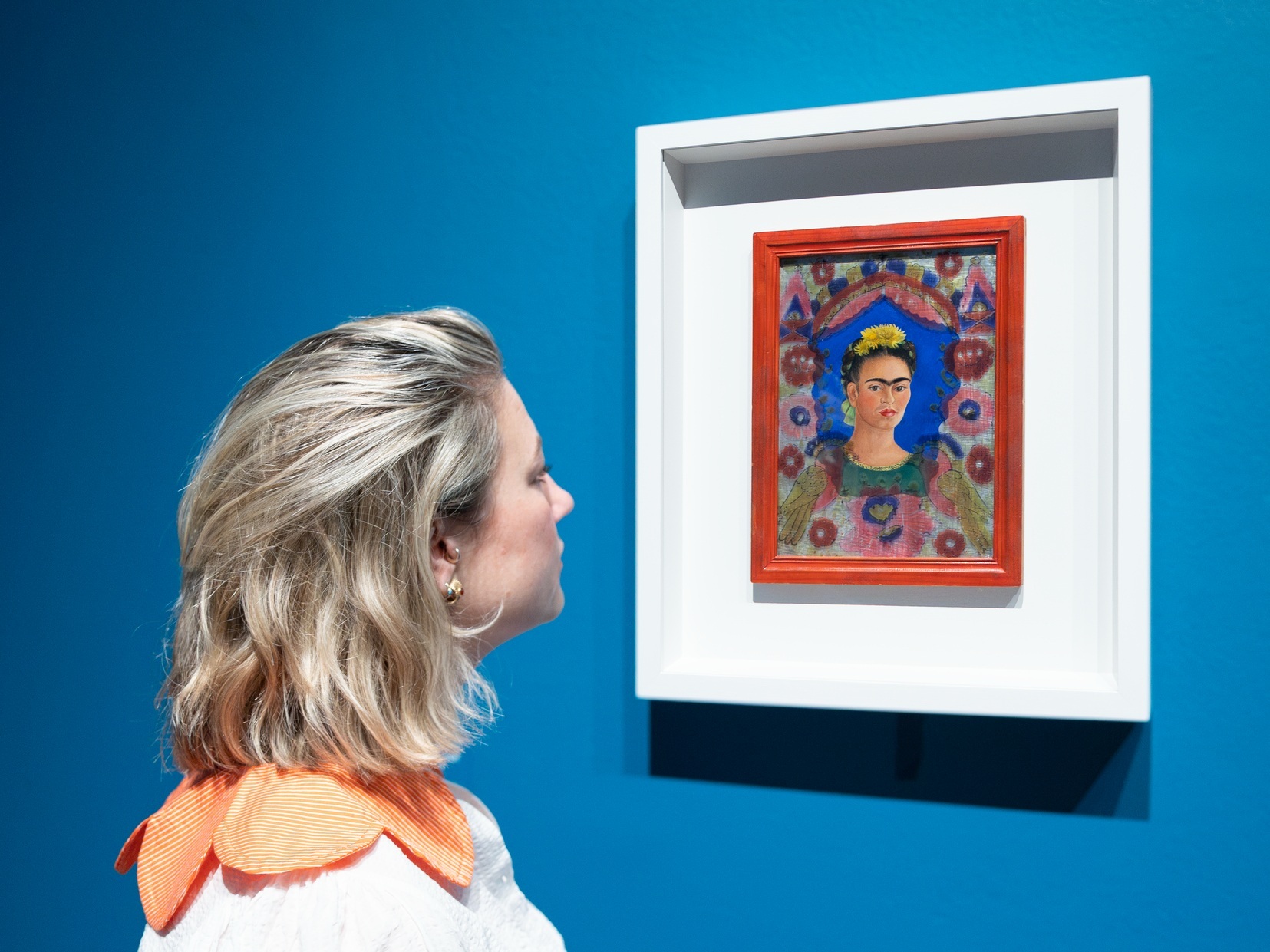
These works are accompanied by photographs she sat for, her jewellery, a selection of Indigenous Mexican clothing from Kahlo’s wardrobe, and an excerpt from a film by Nikolas Muray capturing a tender moment between Frida and Diego. Tucked away in one corner of the gallery is a black-and-white photograph of Kahlo painting from her bed, using a specially designed easel that suspended the canvas above her, allowing her to continue working as she recovered from the injuries sustained in her near-fatal bus accident. And the frames. Oh, the frames. I could happily devote this entire article to them alone. A tiny painting scarcely larger than a matchbox sits inside a handcrafted Oaxacan tin frame, while a composite portrait of Kahlo and Rivera is enclosed within a border adorned with clam shells that Kahlo collected in Veracruz.
It’s difficult to tell where the exhibition ends and the gift shop begins.
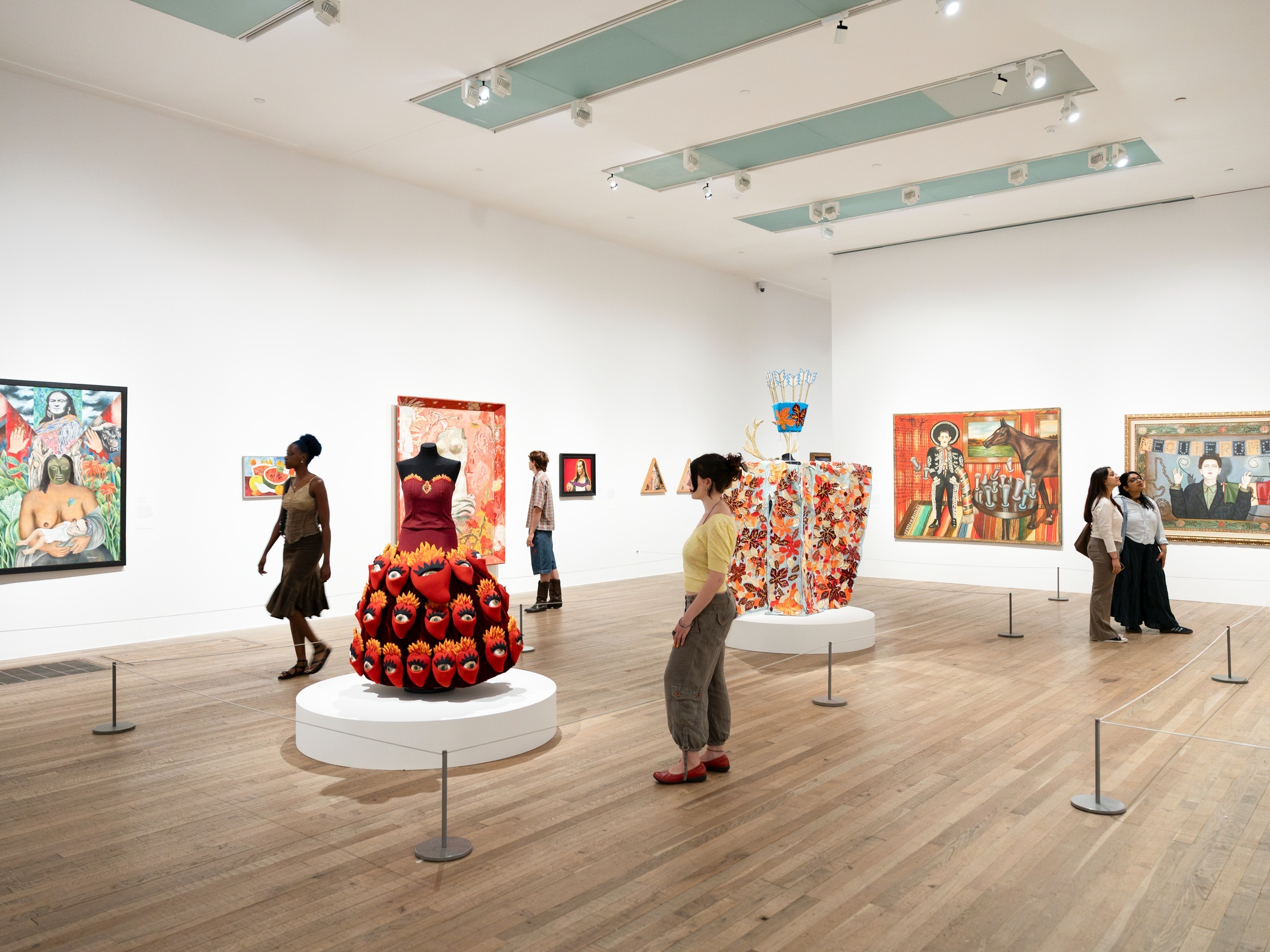
From here, the exhibition broadens out into an account of Kahlo’s afterlife. Her work is placed in dialogue with modern and contemporary artists influenced by her imagery, politics and self-fashioning; her embrace by the Chicana/o movement is explored; and her impact on generations of women artists is traced through themes of identity, gender and self-representation. Much of it is interesting. Whether it is more interesting than another room of Kahlo’s own paintings, I’m not so sure.
The final galleries chart the rise of ‘Fridamania’: the shrines, sacred hearts and handcrafted tributes that transformed Kahlo from artist into folk hero before turning her into a global brand. Glass cabinets are filled with Crocs, socks, lip balms and egg cups bearing Kahlo’s likeness. It’s difficult to tell where the exhibition ends and the gift shop begins.
Of course, some admirers collect more than souvenirs. Madonna, one of Kahlo’s more prominent collectors, owns ‘My Birth’ (1932), in which the artist depicts herself emerging from the body of her mother, blood pooling onto the bed. It’s a portrait of suffering and pain, self-representation at its most uncompromising, and possibly one of Kahlo’s most preeminent works. ‘If somebody doesn’t like this painting,’ Madonna said in 1990, ‘then I know they can’t be my friend.’ The irony is that the only people currently able to see it are, in all likelihood, Madonna’s friends. The Queen of Pop declined to lend the work to the Tate for this show. And that’s not the only masterpiece not here.
Also missing are several more of Kahlo’s most recognisable works; ‘The Broken Column’ (1944), a self-portrait painted after her spinal surgery; ‘The Two Fridas’ (1939), her monumental meditation on identity and heartbreak; and ‘Self-Portrait with Cropped Hair’ (1940), made shortly after her divorce from Diego Rivera. For the megafans, their absence is felt, particularly for those who remember Tate’s 2005 retrospective, which brought together many more of these iconic works (including two of Madonna’s).
But I’m sure that won’t stop the masses from coming. Frida’s popular. Really popular. So if you want to get a proper look in on that matchbox-sized painting up close – and trust me, it’s worth it – I’d recommend avoiding the high days and holidays. Take Monday morning off work and get in before the crowds.
ICYMI: Six Frida Kahlo-inspired murals have popped up around London’s South Bank.
The 10 best art exhibitions in London right now.
Get the latest and greatest from the Big Smoke – from news and reviews to events and trends. Just follow our Time Out London WhatsApp channel.
Stay in the loop: sign up for our free Time Out London newsletter for the best of the city, straight to your inbox.